كيفية الاختيار بين AZUD PRO وPC AS وPC CNL وخط التنقيط Blank Dripline
Dripline selection should not be based only on pipe diameter, emitter spacing, or price per metre. The correct choice depends on terrain, lateral length, pressure variation, installation method, irrigation strategy, crop layout, and expected service conditions.
AZUD PRO, pressure-compensating anti-siphon models, CNL models, and blank polyethylene tubing serve different applications. Understanding these differences helps prevent uneven irrigation, emitter drainage, soil suction, and unnecessary project cost.
1. AZUD PRO: For Flat Terrain and Conventional Surface Irrigation
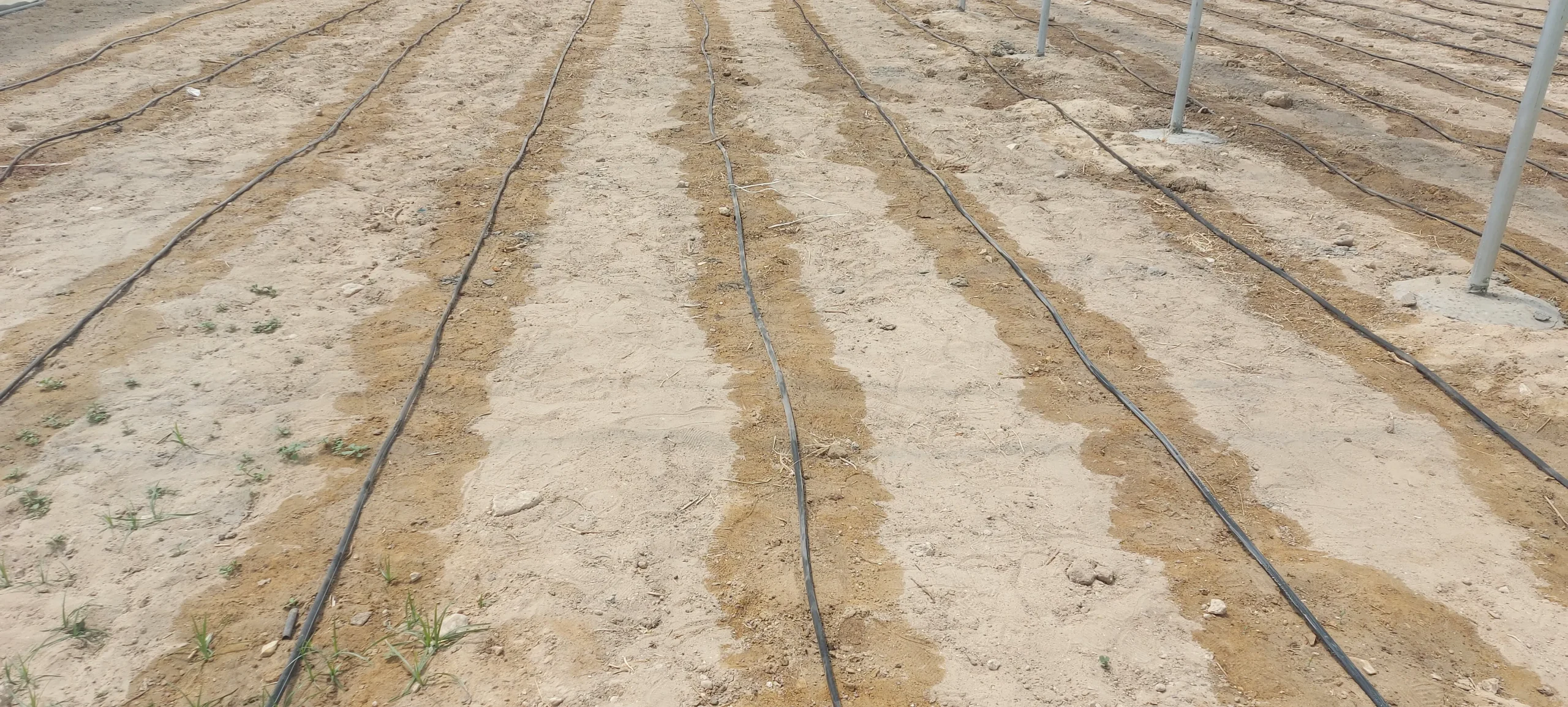
AZUD PRO is a heavy-wall dripline with integrated, non-pressure-compensating emitters. AZUD identifies it for relatively flat terrain and surface installation. Its official range includes different emitter flow rates and wall thicknesses depending on diameter and configuration. AZUD PRO’s official product page also highlights its integrated emitter, anti-clogging design, UV resistance, and suitability for long-term agricultural applications.
Because it is non-pressure-compensating, emitter flow changes with inlet pressure.
It may be suitable when:
- The terrain is relatively flat.
- Lateral lengths are hydraulically controlled.
- Pressure variation remains within acceptable limits.
- The dripline is installed above ground.
- The project requires a durable, heavy-wall integrated dripline.
- Filtration and flushing are properly designed.
- Before selection, the designer must calculate the expected pressure loss along the lateral and confirm that flow variation remains acceptable.
2. PC: For Uneven Terrain and Longer Laterals
A pressure-compensating emitter is designed to maintain a more stable discharge across a defined pressure range.
It may be useful when:
- The land contains elevation differences.
- Laterals are relatively long.
- Pressure varies between the beginning and end of the line.
- Uniform irrigation is particularly important.
- Different operating conditions may occur across the field.
- Pressure compensation does not eliminate the need for hydraulic calculations. The minimum pressure must still reach the farthest emitter, while the maximum pressure must remain within the permitted operating range.
3. PC AS: For Subsurface Drip Irrigation
PC AS generally refers to pressure-compensating emitters with an anti-siphon function.
When a subsurface irrigation system shuts down, negative pressure may develop inside the dripline. Without suitable protection, soil particles can be drawn toward or into the emitter outlet.
The anti-siphon function is designed to reduce this risk. AZUD identifies PC AS as suitable for subsurface drip irrigation because it helps prevent soil particles from being drawn into the emitter when the system stops. AZUD’s pressure-compensating dripline guidance distinguishes PC AS from standard PC emitters on this basis.
PC AS may be suitable when:
- The dripline is installed underground.
- The crop requires subsurface irrigation.
- Surface evaporation needs to be reduced.
- Machinery must move without exposed laterals.
- Long-term buried operation is planned.
- A successful subsurface system also requires suitable filtration, air and vacuum management, flushing points, correct installation depth, and protection against root intrusion where relevant.
4. PC CNL: For Pulse Irrigation and Controlled Drainage
CNL generally refers to a non-leakage or closing function. The emitter remains closed below a defined pressure and opens after the required operating pressure is reached.
This can help keep the dripline filled between short irrigation cycles and reduce uncontrolled drainage from lower emitters after shutdown.
PC CNL may be useful for:
- Pulse irrigation.
- Greenhouses.
- Soilless cultivation.
- Pots, bags, and containers.
- Projects requiring short, repeated irrigation cycles.
- Systems where fast and more simultaneous emitter start-up is important.
- It is particularly relevant where precise irrigation events are short and frequent.
- However, the system must be designed so that pressure reaches the emitter opening threshold quickly and remains within its operating range.
5. Blank Tubing: For Online Emitters and Custom Layouts
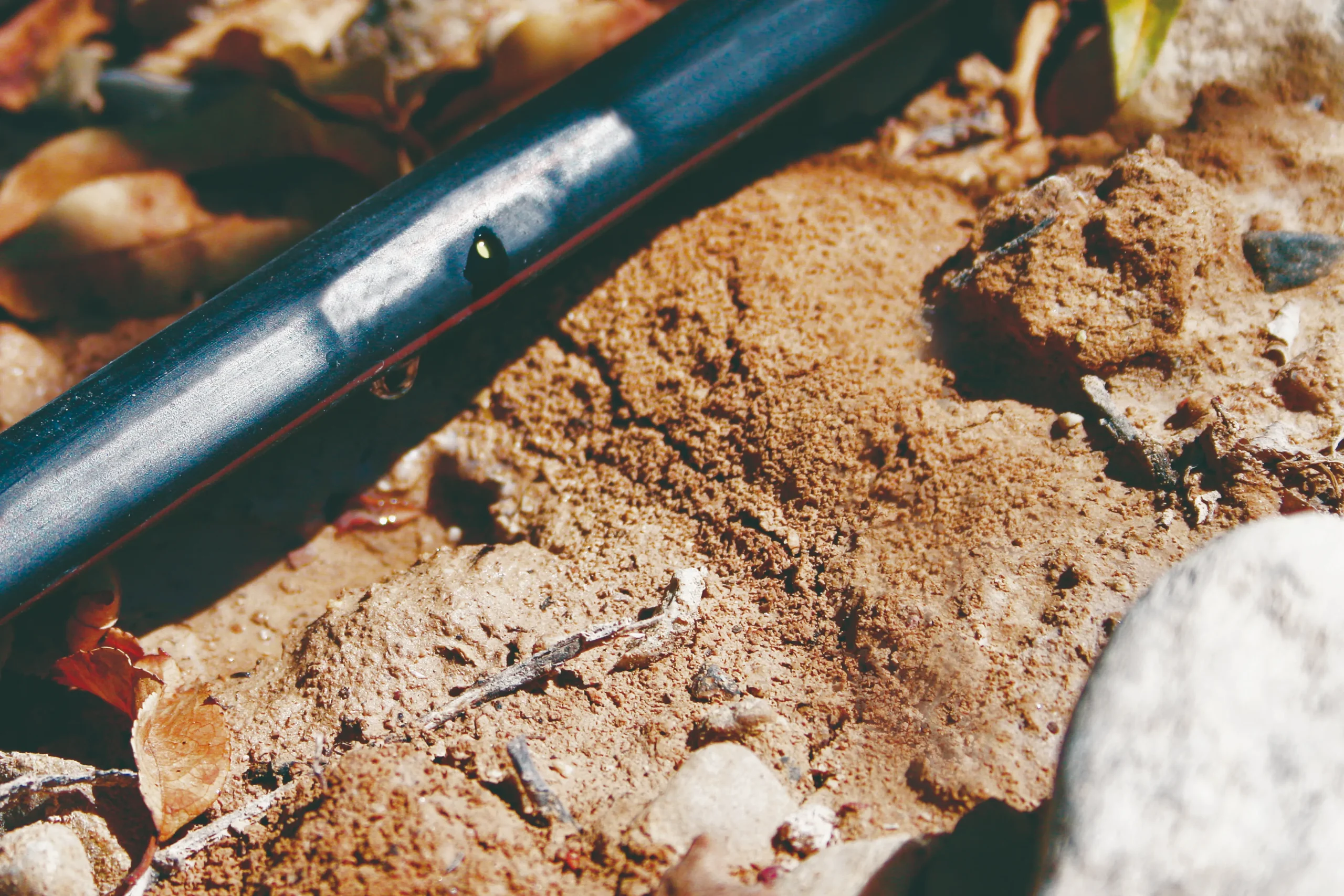
Blank polyethylene tubing contains no integrated emitters. Emitters are installed separately at the required locations.
It may be suitable for:
- Orchards with irregular tree spacing.
- Online drippers.
- Multi-outlet assemblies.
- Pots and individual containers.
- Landscape trees and shrubs.
- Applications requiring custom emitter positioning.
- The referenced 1.2 mm and 1.5 mm values describe the wall thickness, not emitter performance.
A thicker wall may offer greater mechanical durability under certain conditions, but the final selection must also consider:
- Working pressure.
- Pipe diameter.
- Type of online emitter.
- Punching and connection method.
- UV exposure.
- Installation conditions.
- Required flexibility.
- Manufacturer pressure classification.
- Wall thickness alone should never be used as a substitute for pressure rating or technical compatibility.
Quick Application Comparison
Type
| Most Suitable Application
| Main Selection Consideration
AZUD PRO
| Flat terrain and surface irrigation
| Hydraulic pressure variation
PC
| Uneven terrain and longer laterals
| Pressure-compensation range
PC AS
| Subsurface drip irrigation
| Anti-siphon protection
PC CNL
| Pulse irrigation and soilless cultivation
| Opening and closing pressure
Blank 1.2/1.5 mm
| Online emitters and custom spacing
| Pressure rating and installation method
خلط Spray وRotor في القطاع نفسه.
Using non-PC dripline on steep or highly uneven terrain without calculation.
Selecting PC emitters while operating below their compensation range.
Burying standard dripline without considering anti-siphon requirements.
Using CNL emitters without checking opening pressure.
Selecting blank tubing based only on wall thickness.
Ignoring lateral length and elevation difference.
Failing to provide flushing points.
Using filtration that does not meet emitter requirements.
تأكد من:
أبعاد وشكل المنطقة.
- Terrain and elevation difference.
- Lateral length and diameter.
- Required emitter flow.
- Emitter spacing.
- Surface or subsurface installation.
- Continuous or pulse irrigation.
- Operating-pressure range.
- Crop and planting arrangement.
- Water quality and filtration.
- Flushing and air-management requirements.
- Required service life and site conditions.
Conclusion: The correct dripline is not simply the strongest or most advanced option. It is the model whose hydraulic behavior, functionality, and installation method match the field and irrigation strategy.