How to Choose the Right HDPE Fittings for Your Network
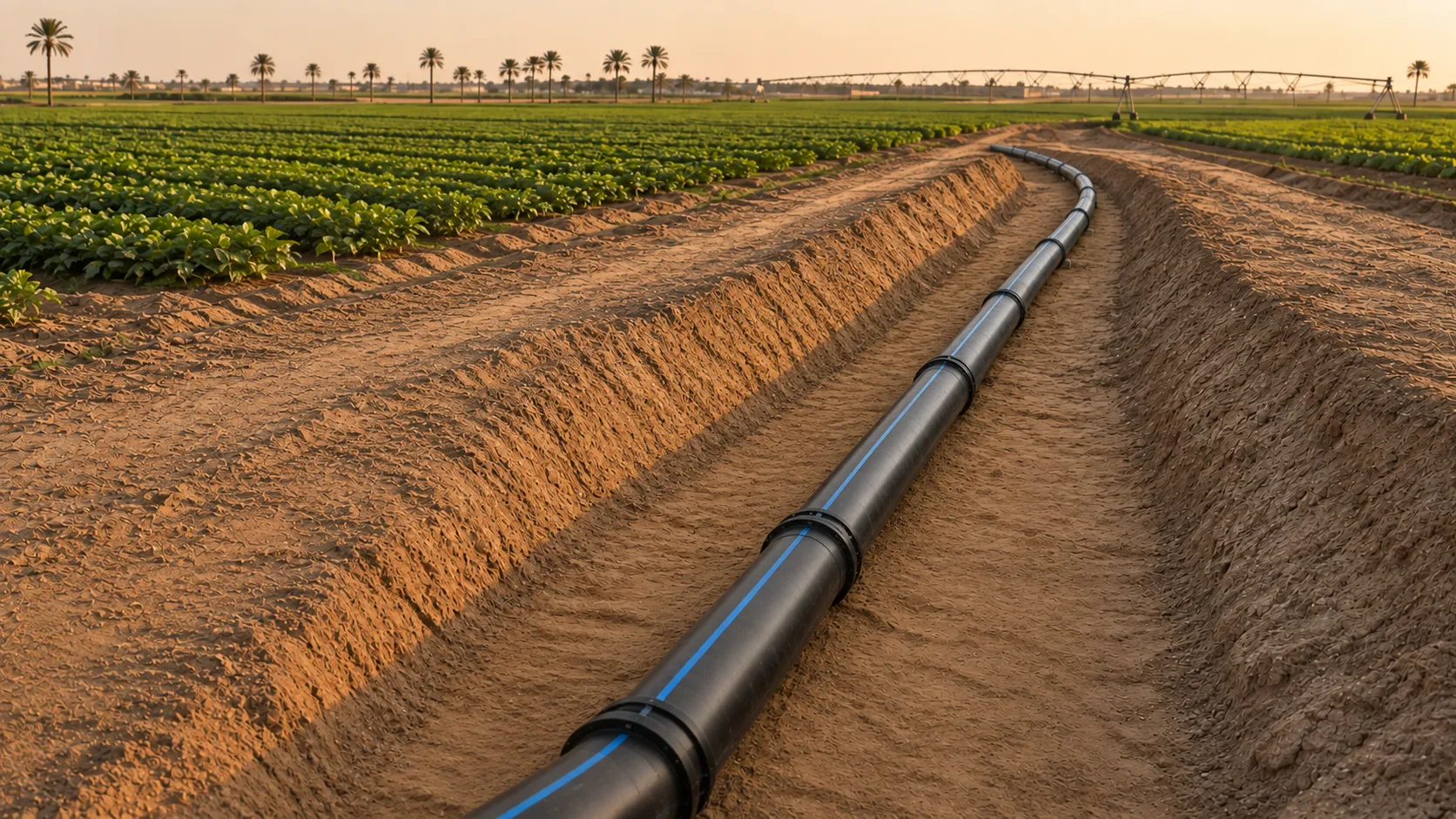
HDPE pipes are known for their flexibility and suitability for a wide range of applications. However, network performance also depends on fitting quality and installation method.
An unsuitable or incorrectly installed fitting can become the weakest point in the network, regardless of pipe quality.
1. Identify the Pipe Specifications
Before selecting the fitting, confirm:
- Pipe outside diameter.
- Wall thickness.
- SDR value.
- Pressure rating.
- Polyethylene material grade.
- Final network application.
- Required technical standard.
- Nominal diameter alone is not sufficient.
2. Understand the Main Connection Methods
Compression Fittings
Compression fittings depend on mechanical compression and sealing components. They are relatively easy to install and dismantle.
They are suitable for various applications, particularly small and medium diameters, within the fitting’s pressure and application limits.
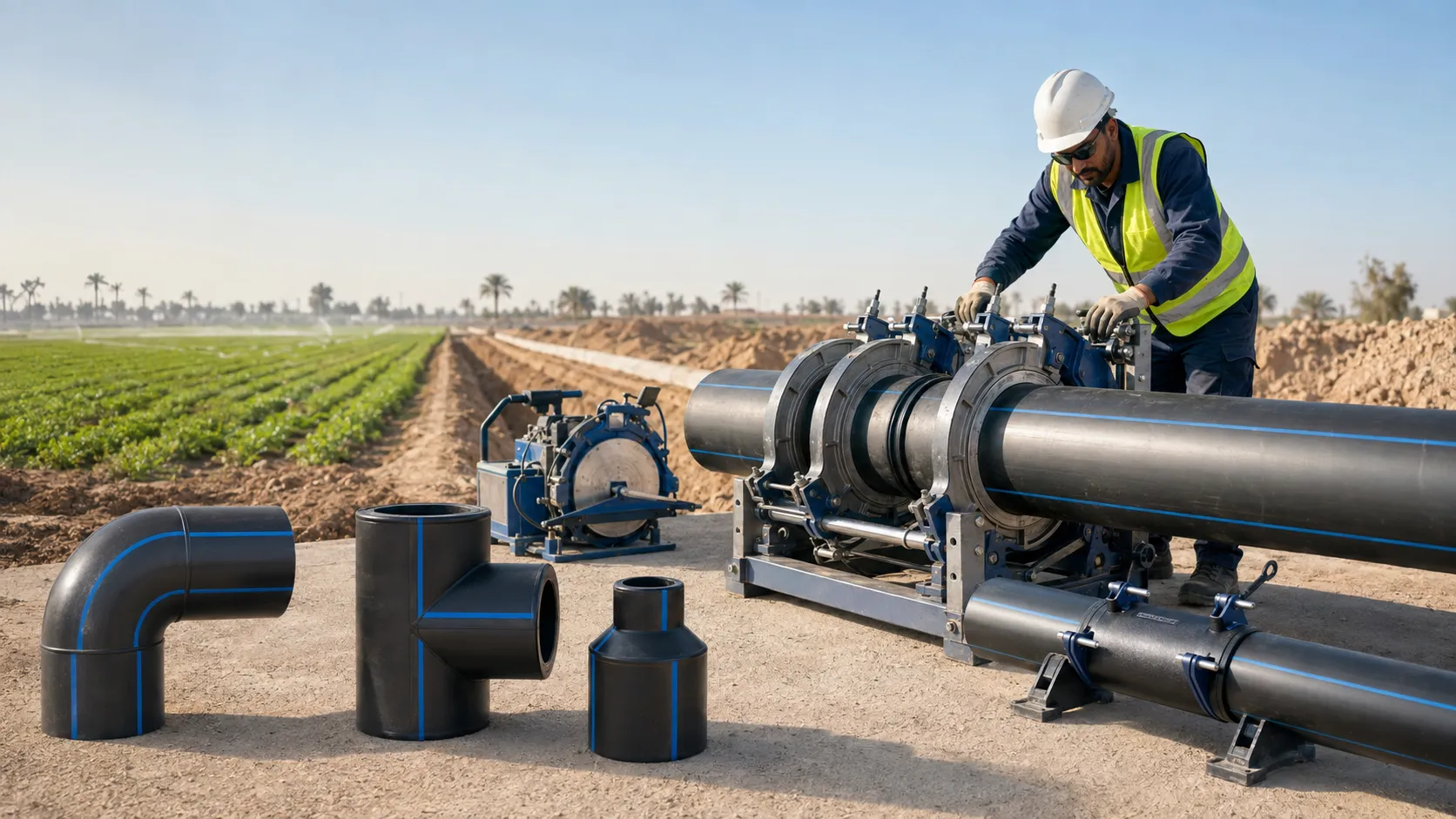
Butt Fusion
The ends of two pipes are heated and joined under controlled conditions to create a continuous joint.
The process requires:
- Suitable fusion equipment.
- Clean and accurately prepared pipe ends.
- Correct heating temperature.
- Controlled pressure and cooling time.
- A trained technician.
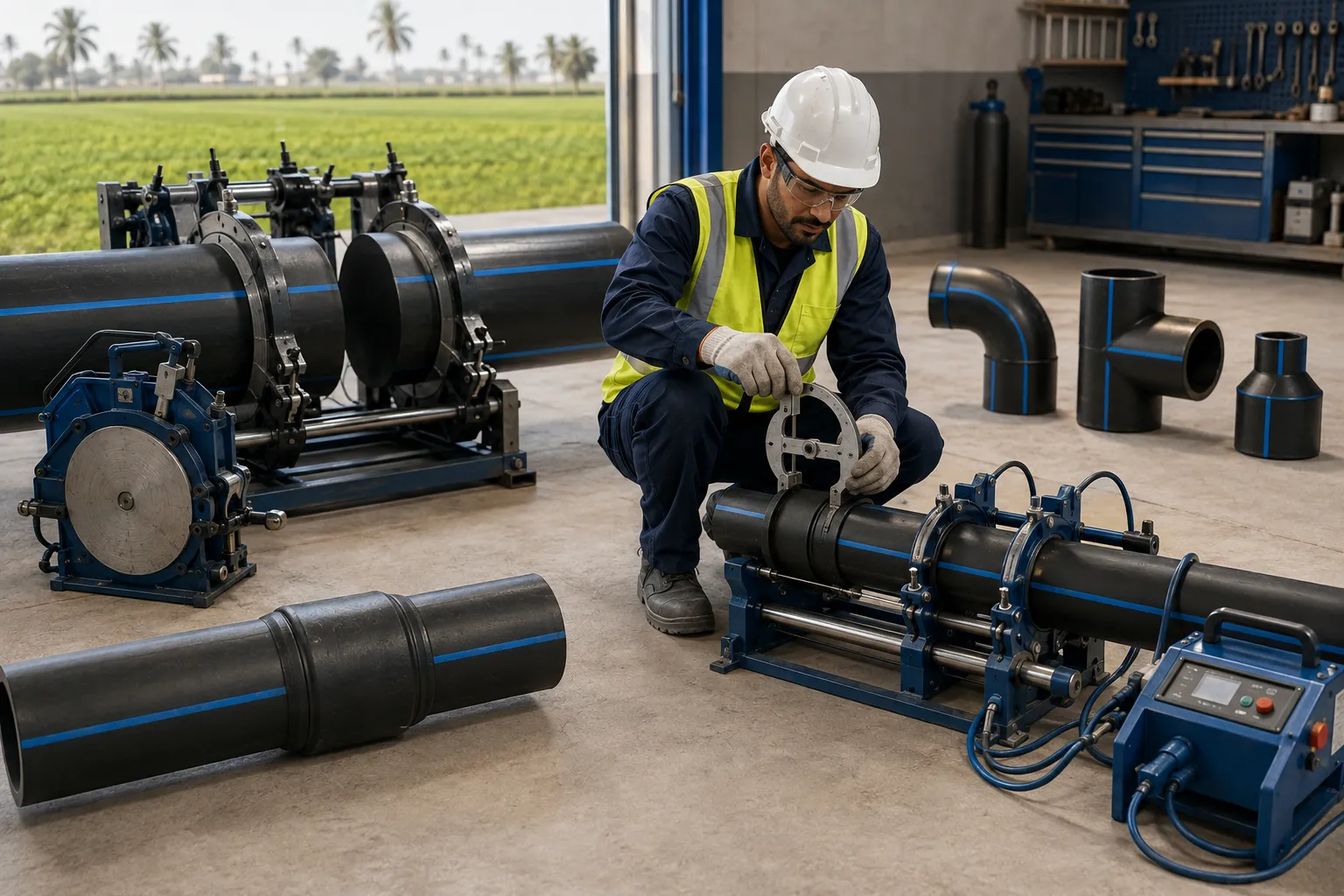
- Electrofusion
- Electrofusion fittings contain integrated heating elements and are installed using specialized equipment.
- They can be useful for certain repairs, restricted spaces, and applications requiring a precisely controlled connection method.
3. How Should the Connection Method Be Selected?
The decision depends on:
- Pipe diameter.
- Network pressure.
- Application type.
- Available working space.
- Access to fusion equipment.
- Installation-team experience.
- Whether future dismantling is required.
- Repair and maintenance conditions.
- Approved project specifications.
- No single connection method is ideal for every application.
4. Review the Pressure Rating
The fitting’s pressure rating must be suitable for the network while considering:
- Operating pressure.
- Static pressure.
- Water hammer.
- Temperature.
- Site conditions.
- Pipe pressure rating.
- A fitting rated below the rest of the network can become a potential failure point.
5. Inspect the Sealing Components
In mechanical fittings, sealing components play a critical role in preventing leakage.
Confirm:
- O-ring condition.
- Cleanliness of the sealing area.
- Absence of cuts or deformation.
- Material compatibility with the water and application.
- Correct component assembly sequence.
- Full pipe insertion to the specified depth.
6. Consider Site Conditions
Site conditions may influence the connection method, including:
- Restricted working space.
- Water, mud, or dust.
- Difficulty stabilizing the pipe.
- Ambient temperature.
- Limited equipment access.
- Need for rapid repairs.
- Ground movement or settlement.
7. Inspect Fittings Upon Delivery
Before approving the supply, verify:
- Manufacturer’s name.
- Size.
- Pressure rating.
- Product code.
- External body condition.
- Absence of cracks or deformation.
- Availability of all components.
- Thread condition.
- Clean sealing components.
- Quantity compliance with the BOQ.
8. Test the Network After Installation
Pressure testing should be completed according to the project specifications and approved procedures.
The process should include:
- Proper pipe restraint.
- Air removal.
- Gradual pressure increase.
- Inspection of all joints.
- Recording test results.
- Repairing any leakage before backfilling or final operation.
Common Mistakes to Avoid
Selecting the fitting based only on diameter.
Using a fitting with a lower pressure rating than the network.
Cutting the pipe at an angle.
Failing to clean the pipe end.
Damaging or displacing the O-ring.
Incorrect fitting tightening.
Using an untrained fusion technician.
Backfilling before pressure testing.
Selection Checklist
Confirm:
- Pipe diameter and wall thickness.
- SDR and pressure rating.
- Pipe material grade.
- Connection method.
- Operating pressure.
- Site conditions.
- Installation-team experience.
- Future maintenance requirements.
- Required standards and approvals.
- Network-testing procedure.
Conclusion: The strength of an HDPE network depends not only on the pipe, but on the compatibility of the pipe, fitting, installation method, and testing procedure as one complete system.