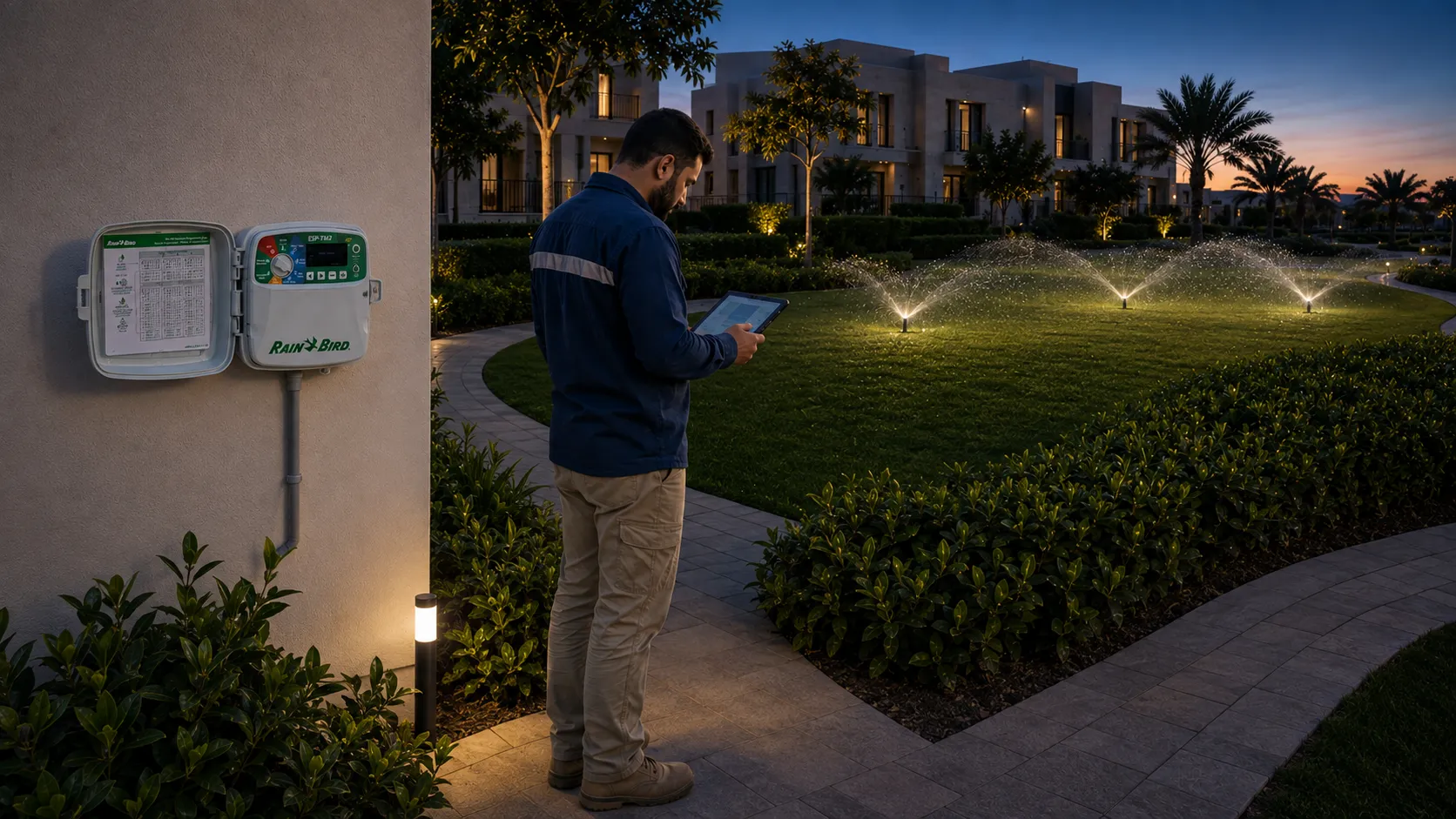
How to Choose the Right Irrigation Controller for a Landscape Project
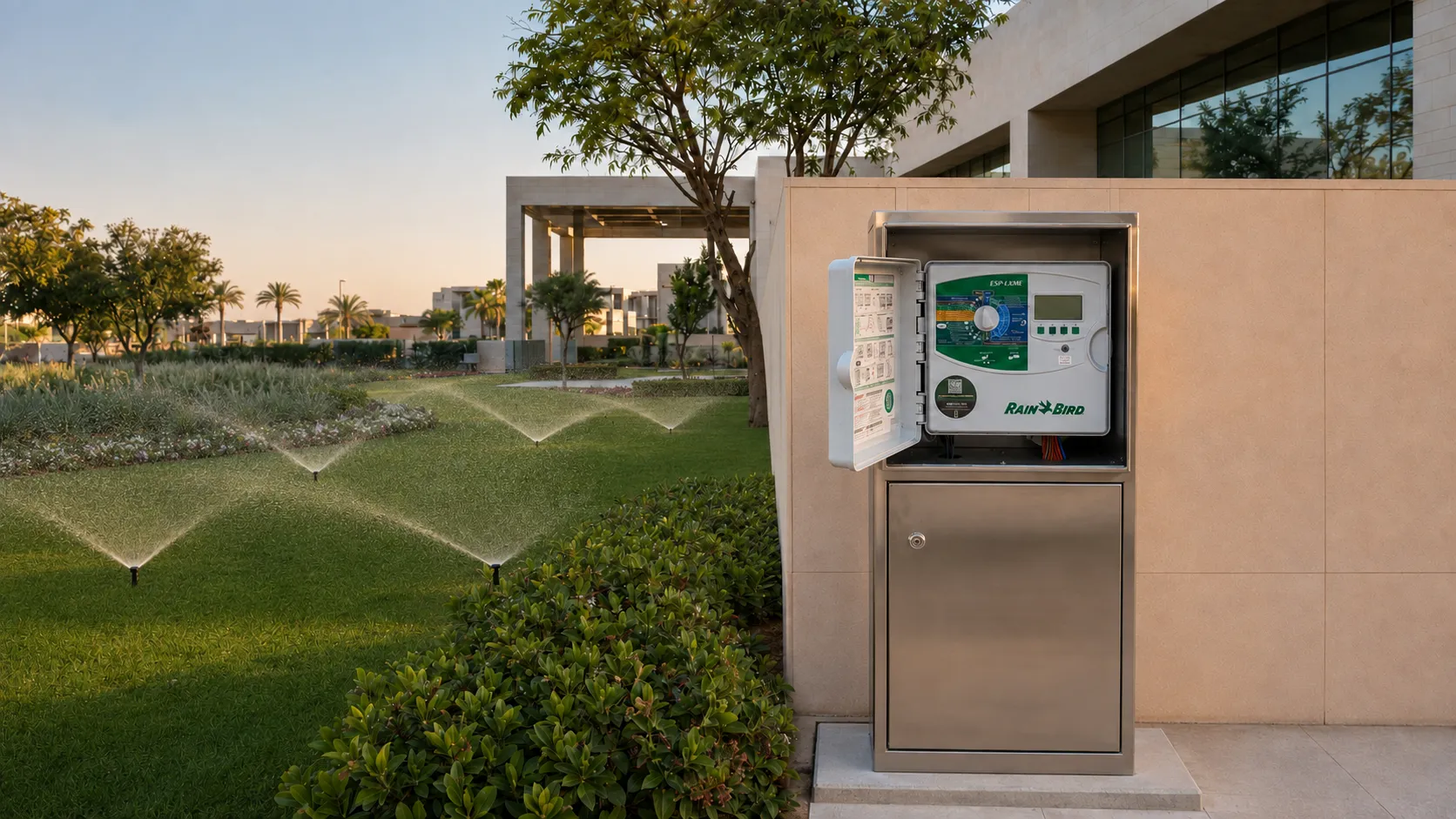
An irrigation controller is the operational brain of a landscape irrigation system. It determines when irrigation starts, how long each zone operates, and how the system responds to weather, flow conditions, and changing site requirements.
Choosing the right controller should not depend only on the number of stations. The decision should consider the size of the project, type of wiring, operating requirements, sensors, remote access, future expansion, and the maintenance capabilities of the site team.
1. Define the Number of Irrigation Zones
Each independently operated valve usually requires a separate controller station.
Before choosing the controller, identify:
- Current number of irrigation zones.
- Number of master valves and pump-start outputs.
- Zones that may operate simultaneously.
- Future landscape expansion.
- Spare stations required for future modifications.
- Selecting a controller with no spare capacity may require replacing it when the project expands.
2. Fixed-Station or Modular Controller?
Fixed-Station Controller
A fixed controller has a predetermined number of stations.
It may be suitable for:
- Villas and private gardens.
- Small residential landscapes.
- Projects with a stable number of zones.
- Installations where future expansion is unlikely.
- Modular Controller
- A modular controller allows additional station modules to be installed as the project grows.
It may be more appropriate for:
- Compounds and commercial developments.
- Hotels and resorts.
- Large public landscapes.
- Projects delivered in multiple phases.
- Sites where future expansion is expected.
- For example, Rain Bird offers compact fixed-station controllers for residential applications, modular systems for larger landscapes, and two-wire controllers for extensive commercial projects. Rain Bird’s controller portfolio includes different configurations based on project scale and wiring architecture.
3. Conventional Wiring or Two-Wire System?
Conventional Wiring
In a conventional system, each valve normally has an individual control wire connected to the controller, in addition to the common wire.
It is generally suitable for:
- Small and medium projects.
- Sites with relatively short cable distances.
- Projects with a limited number of valves.
- Installations where troubleshooting individual wires is practical.
- Two-Wire System
- A two-wire system uses one main communication path with decoders or integrated valve devices distributed throughout the site.
It may be more suitable for:
- Large landscapes.
- Golf courses.
- Resorts and campuses.
- Projects with many valves.
- Long cable distances.
- Sites requiring flexible future expansion.
- Two-wire systems can reduce the amount of field wiring, but they require correct design, installation, programming, and trained maintenance personnel.
4. Indoor or Outdoor Installation?
The controller enclosure must suit its installation environment.
Review:
- Indoor or outdoor location.
- Exposure to rain, dust, and humidity.
- Direct sunlight and temperature.
- Risk of vandalism or accidental impact.
- Available electrical supply.
- Accessibility for operation and maintenance.
- An indoor controller should not be installed outdoors unless placed inside a properly designed protective enclosure.
5. Determine the Required Scheduling Flexibility
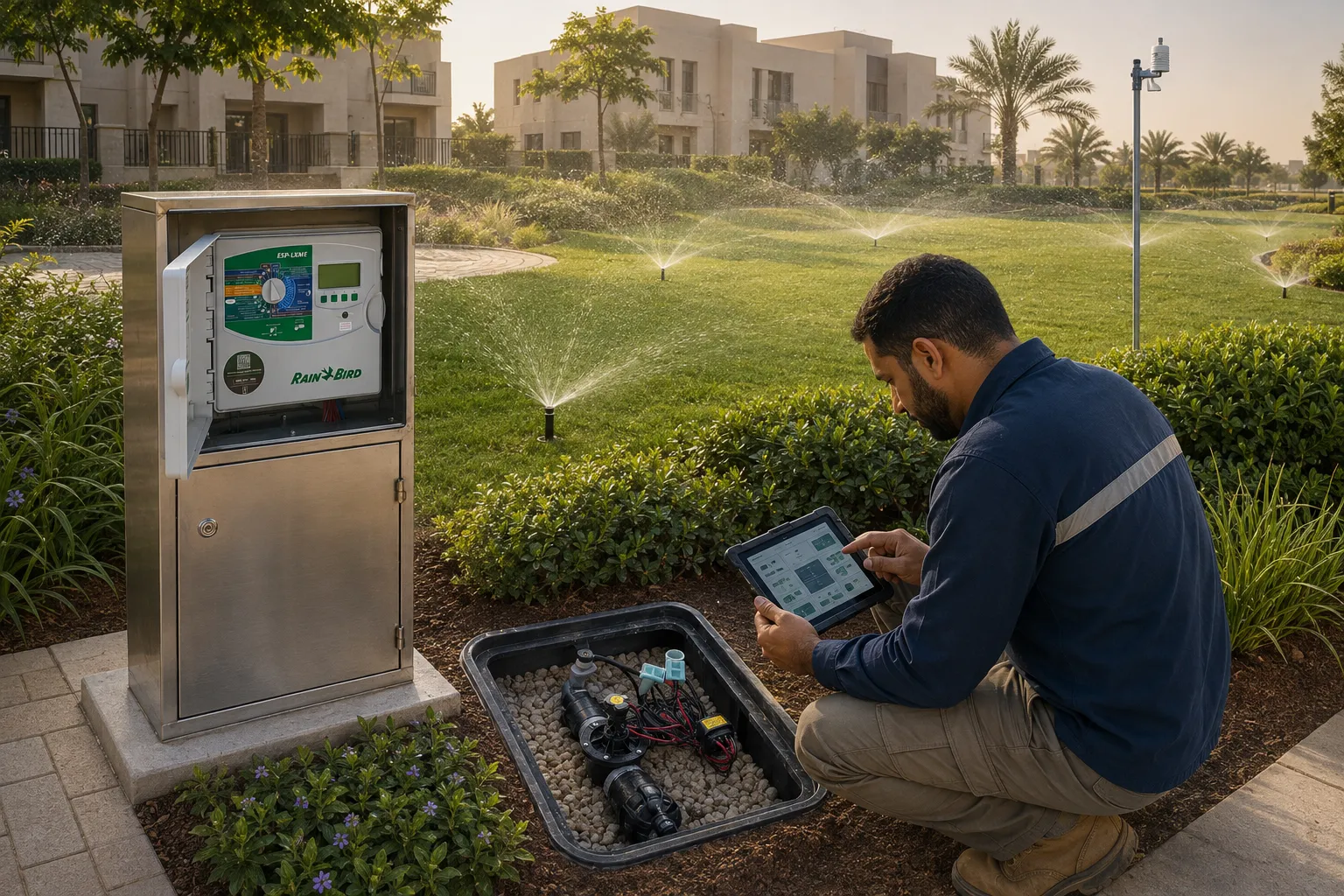
The controller should support the irrigation strategy of the site.
Consider:
- Number of independent programs.
- Number of start times.
- Watering days and cyclic schedules.
- Run time for each station.
- Seasonal adjustment.
- Rain delay.
- Cycle-and-soak operation.
- Manual zone operation.
- Simultaneous-zone operation where hydraulically permitted.
- Cycle-and-soak can be particularly useful in sloped areas or soils with low infiltration rates because it divides irrigation into shorter cycles separated by soaking periods.
6. Does the Project Need Remote Access?
Wi-Fi or remote connectivity may help the team:
- Adjust schedules without visiting the controller.
- Stop irrigation during maintenance.
- Review system status.
- Respond to weather changes.
- Manage multiple controllers.
- Give temporary access to maintenance teams.
- However, Wi-Fi alone does not automatically make an irrigation system efficient. Water savings depend on correct design, suitable scheduling, accurate field data, and appropriate sensor integration.
7. Consider Sensor Integration
Depending on the project, the controller may need to communicate with:
- Rain sensors.
- Soil-moisture sensors.
- Weather sensors.
- Flow sensors.
- Pressure sensors.
- Pump systems.
- Master valves.
- A flow sensor can help identify abnormal flow, but only if the controller supports the sensor and has been configured using realistic operating limits.
8. Review Power Availability
Some sites have reliable electrical power, while others may require:
- Battery-powered controllers.
- Solar-supported systems.
- Latching solenoids.
- Additional protection against voltage fluctuations.
- Battery-operated controllers can be useful where electrical cables cannot be extended economically, but battery condition must become part of the maintenance plan.
Common Mistakes to Avoid
Selecting the controller based only on current station count.
Ignoring future expansion.
Installing an indoor enclosure outdoors.
Adding Wi-Fi without planning who will manage remote access.
Connecting sensors without configuring their operating limits.
Mixing incompatible solenoids and controller outputs.
Programming all zones with the same run time.
Ignoring cable distance and voltage drop.
Selection Checklist
Confirm:
- Current and future number of stations.
- Conventional or two-wire architecture.
- Indoor or outdoor installation.
- Required irrigation programs.
- Sensor requirements.
- Remote-access requirements.
- Pump and master-valve control.
- Power availability.
- Cable distances.
- Maintenance-team capabilities.
Conclusion: The right controller is the one that matches the hydraulic design, site size, wiring architecture, operational requirements, and ability of the maintenance team to manage the system effectively.