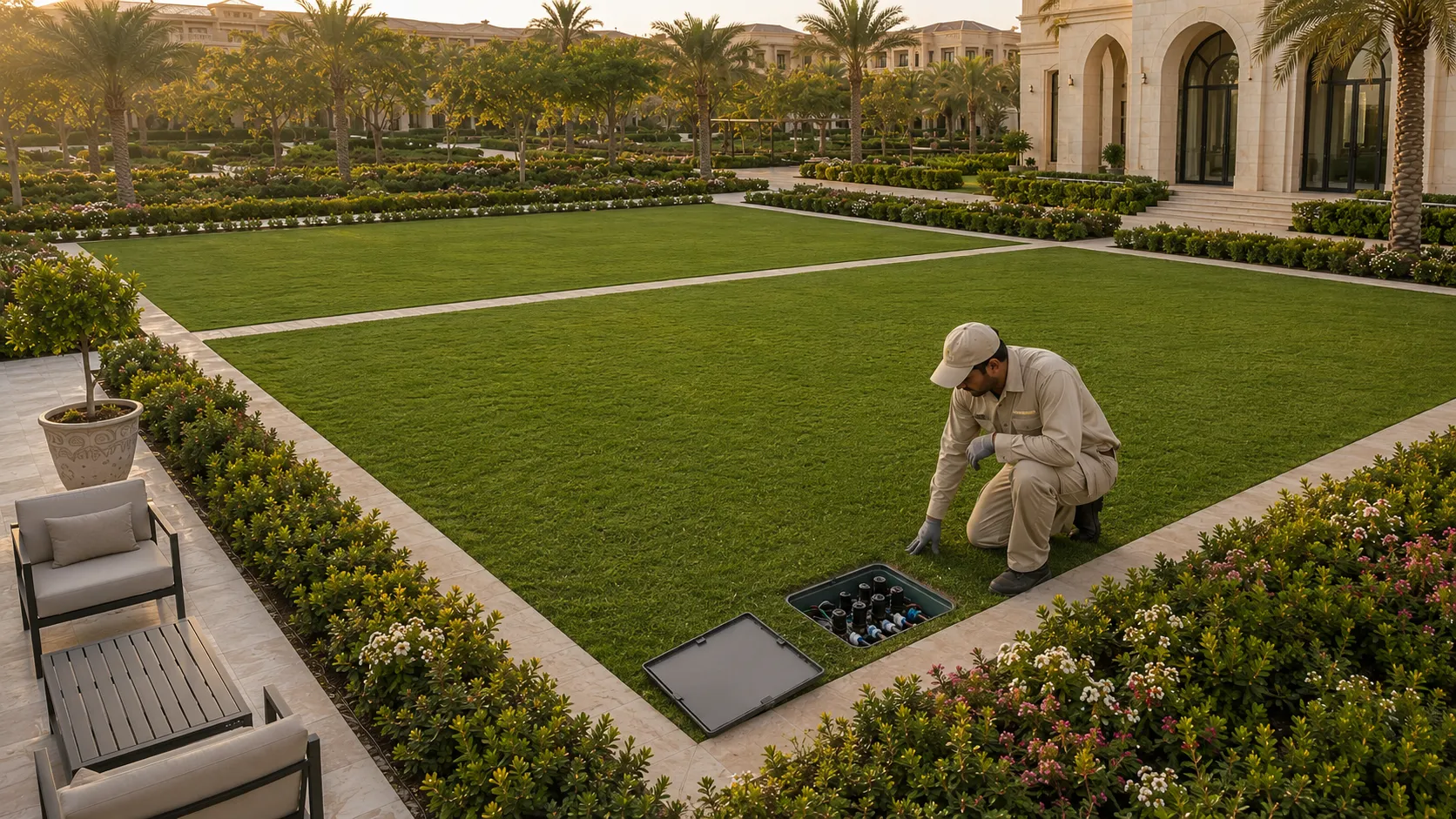
How to Choose the Right Sprinkler for a Landscape Project
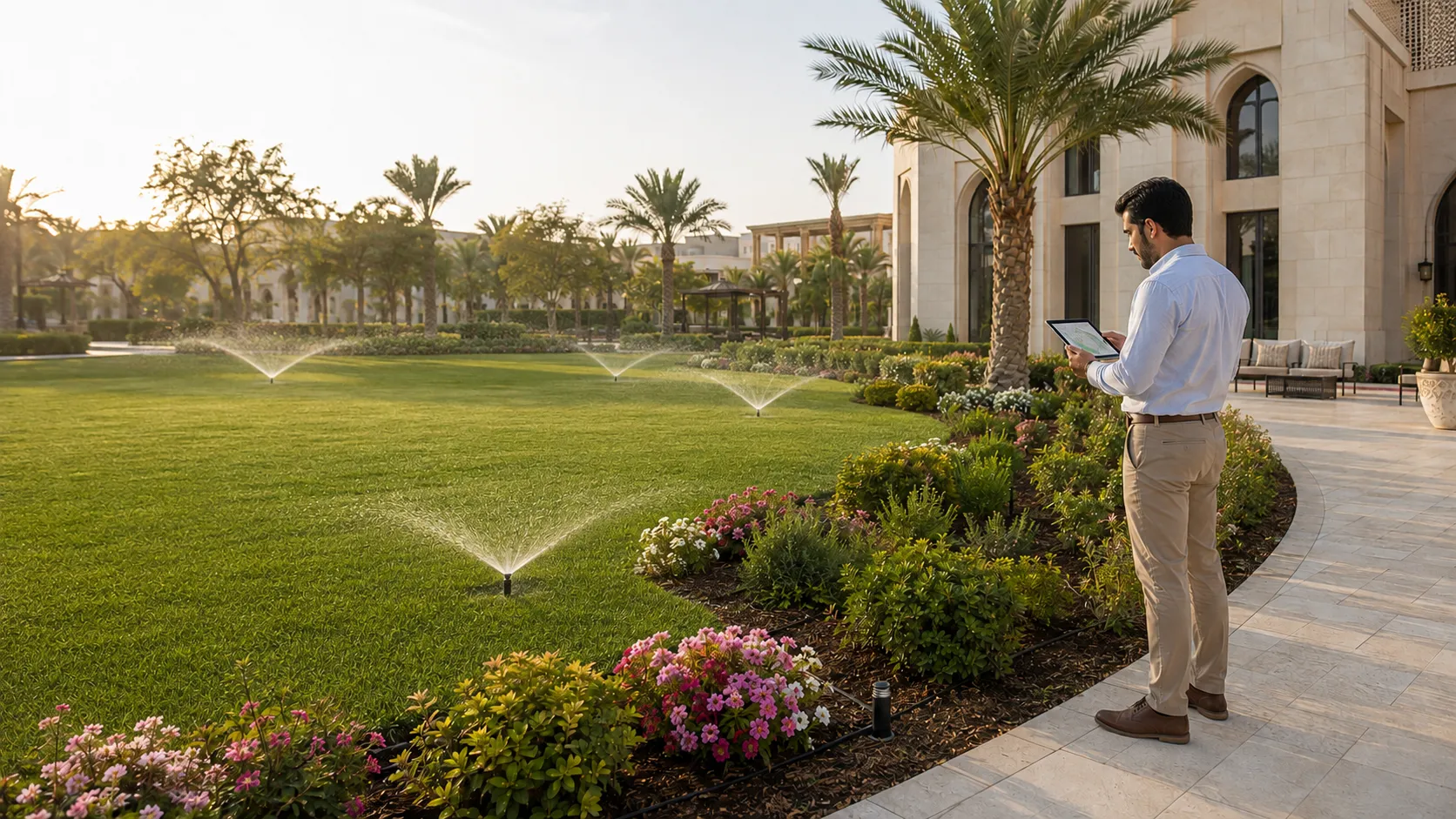
Sprinkler selection should not be based only on price or the maximum radius shown in the catalogue. Successful irrigation requires compatibility between the sprinkler, site dimensions, available pressure, plant type, wind conditions, and spacing layout.
1. Study the Shape and Size of the Area
Identify:
- Length and width of the landscaped area.
- Curves and narrow corners.
- Adjacent paths and buildings.
- Changes in elevation.
- Tree and shrub areas.
- Locations that must remain dry.
- Small or narrow areas require different solutions from large, open landscapes.
2. Understand the Main Irrigation Types
Spray Sprinklers
Generally suitable for small and medium areas. They usually apply a relatively high amount of water over a shorter operating period.
Rotors
Suitable for larger areas and generally provide a longer radius with a lower precipitation rate.
Impact Sprinklers
Used in certain open areas and applications requiring specific operating characteristics.
Dripline
More appropriate for shrub beds, trees, and areas where water should be delivered directly to the root zone.
3. Review Pressure and Flow
Every sprinkler has a specified operating range.
Insufficient pressure may lead to:
- Reduced irrigation radius.
- Poor water distribution.
- Dry areas.
Excessive pressure may lead to:
- Fine mist formation.
- Wind drift.
- Increased water loss.
- Water reaching areas outside the target zone.
- Additional stress on network components.
4. Select the Radius and Arc
The irrigation radius must suit the dimensions of the area.
Common arc options include:
- 90 degrees for corners.
- 180 degrees for edges.
- 360 degrees for internal areas.
- Adjustable arcs for irregular shapes.
- Correct arc selection helps prevent water from reaching roads, walls, and façades.
5. Apply Head-to-Head Spacing
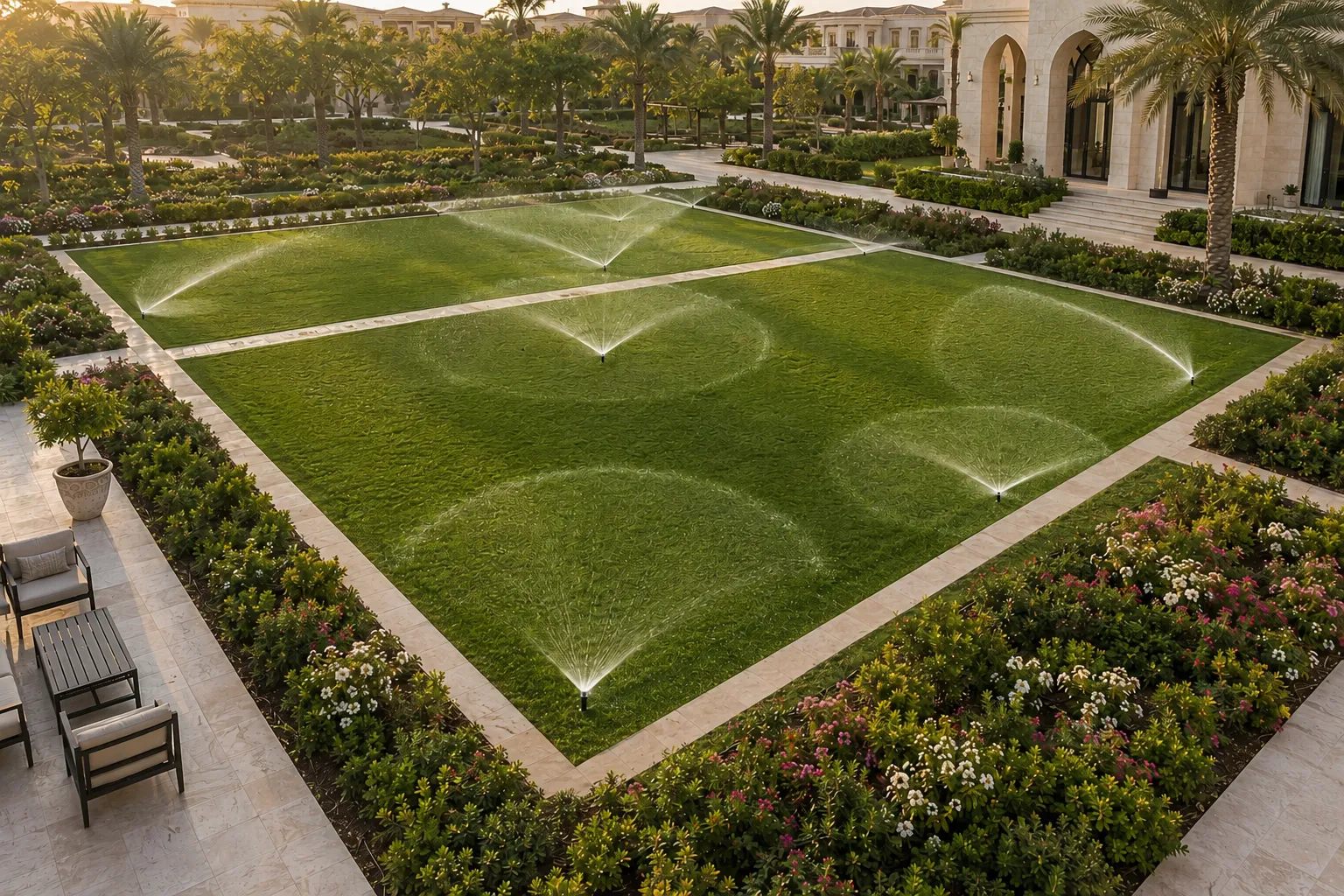
One of the most important sprinkler-layout principles is that each sprinkler should approximately reach the location of the next sprinkler.
Using the maximum theoretical radius with excessive spacing may result in weak overlap and dry areas, especially under windy or unstable pressure conditions.
6. Avoid Mixing Different Precipitation Rates
Sprinklers with significantly different precipitation rates should generally not operate in the same irrigation zone.
Because all sprinklers in a zone run for the same period, mismatched precipitation rates may result in overwatering some areas and underwatering others.
Review compatibility between:
- Sprinkler type.
- Nozzle type.
- Arc.
- Precipitation rate.
- Operating time.
7. Consider Wind and Slope
Wind can affect water distribution, particularly in open or coastal sites. On slopes, high precipitation rates may cause runoff.
Possible solutions include:
- Reducing sprinkler spacing.
- Selecting suitable nozzles.
- Irrigating during periods of lower wind.
- Dividing irrigation into shorter cycles.
- Using lower precipitation rates on slopes.
Common Mistakes to Avoid
Designing the layout according to maximum radius alone.
Mixing sprays and rotors in the same zone.
Ignoring wind conditions.
Failing to check pressure at the farthest point.
Selecting incorrect arcs.
Irrigating trees and turf using the same method.
Allowing water to reach paths and façades.
Selection Checklist
Confirm:
- Area dimensions and shape.
- Plant types.
- Available pressure and flow.
- Required radius.
- Required arc.
- Precipitation rate.
- Wind conditions.
- Soil type.
- Site slope.
- Control system and number of zones.
Conclusion: The right sprinkler provides uniform coverage within the intended area and works efficiently with the network pressure, site conditions, and landscape requirements.