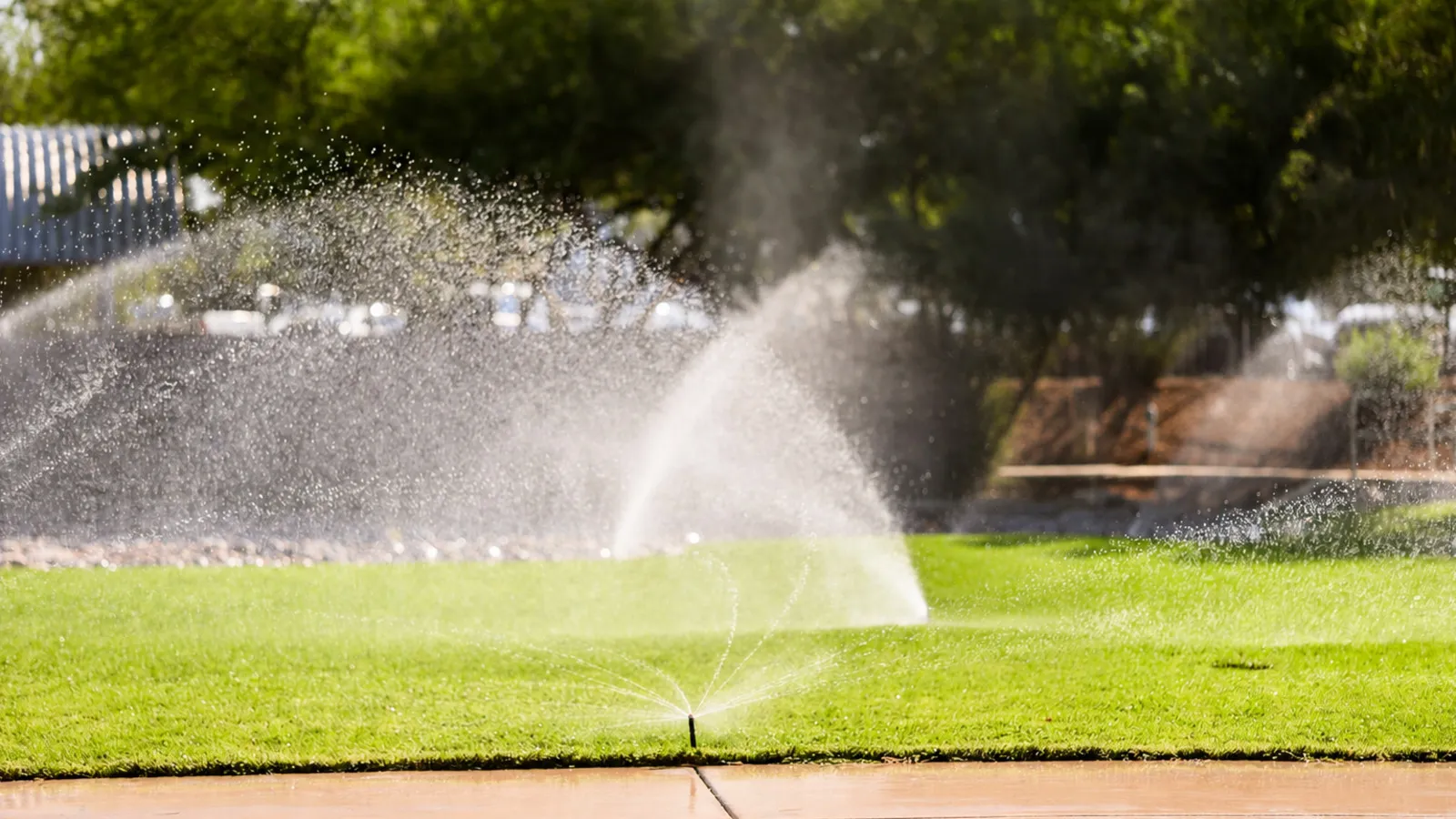
How to Choose the Right Type of Sprinkler for Your Project
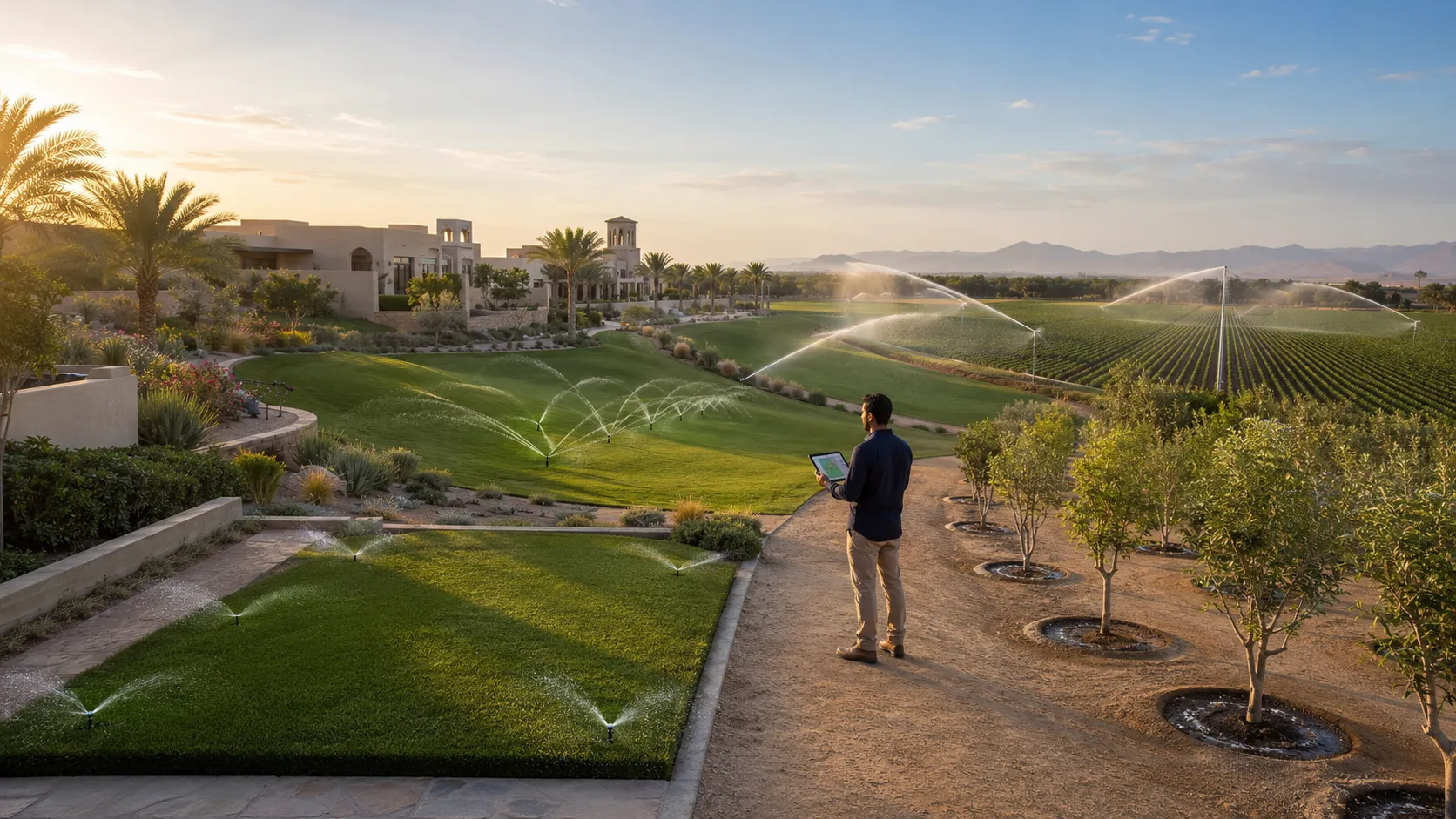
The word “sprinkler” covers several product categories with very different operating characteristics. Spray heads, rotors, impact sprinklers, and agricultural sprinklers do not provide the same radius, flow, precipitation rate, or resistance to site conditions.
Correct selection begins by understanding the application—not by choosing the sprinkler with the longest published radius.
1. Fixed Spray Sprinklers
Spray heads distribute water through a fixed or adjustable spray nozzle. They are generally used for smaller landscape areas.
They may be suitable for:
- Small lawns.
- Narrow strips.
- Residential gardens.
- Areas with short distances between sprinkler locations.
- Irregular landscape shapes.
Typical characteristics include:
- Short to medium radius.
- Relatively high precipitation rate.
- Multiple nozzle patterns.
- Shorter run times than many rotor zones.
- Sprays should not normally be mixed with rotors in the same irrigation zone because their precipitation rates are different.
2. Rotary Nozzles
Rotary nozzles are installed on compatible spray bodies but distribute water through rotating streams rather than a continuous fan spray.
They may be useful for:
- Medium-sized landscape areas.
- Irregular zones.
- Sloped sites.
- Soils with slower infiltration.
- Retrofit projects where lower precipitation is required.
- Because they generally apply water more slowly, they can reduce runoff when properly selected and scheduled.
- However, rotary nozzles should be grouped with compatible nozzles and operated at the recommended pressure.
3. Gear-Driven Rotors
Rotors use an internal drive mechanism to rotate one or more water streams over a larger area.
They are commonly used for:
- Large lawns.
- Compounds.
- Parks.
- Hotels and resorts.
- Sports landscapes.
- Commercial projects.
Rotors generally provide:
- Longer radius than spray heads.
- Lower precipitation rate.
- Adjustable arcs.
- Interchangeable nozzles.
- Greater spacing between sprinklers.
- The designer must select the nozzle according to radius, arc, pressure, flow, and required precipitation rate.
4. Impact Sprinklers
Impact sprinklers rotate through the repeated movement of an impact arm.
They may be suitable for:
- Agricultural irrigation.
- Open landscapes.
- Certain applications with less-clean water.
- Areas where a strong water stream is required.
- Some impact designs provide a relatively open water passage. Rain Bird’s Maxi-Paw impact rotor, for example, uses a straight-through flow path and interchangeable nozzles, making it suitable for certain challenging water conditions. Rain Bird Maxi-Paw specifications still require the designer to verify pressure, flow, radius, and nozzle selection.
5. Agricultural Sprinklers
Agricultural sprinkler selection depends on:
- Crop type.
- Crop height.
- Soil infiltration.
- Wind conditions.
- Required application rate.
- Lateral spacing.
- Sprinkler spacing.
- Available pressure and flow.
- Fixed, portable, or solid-set installation.
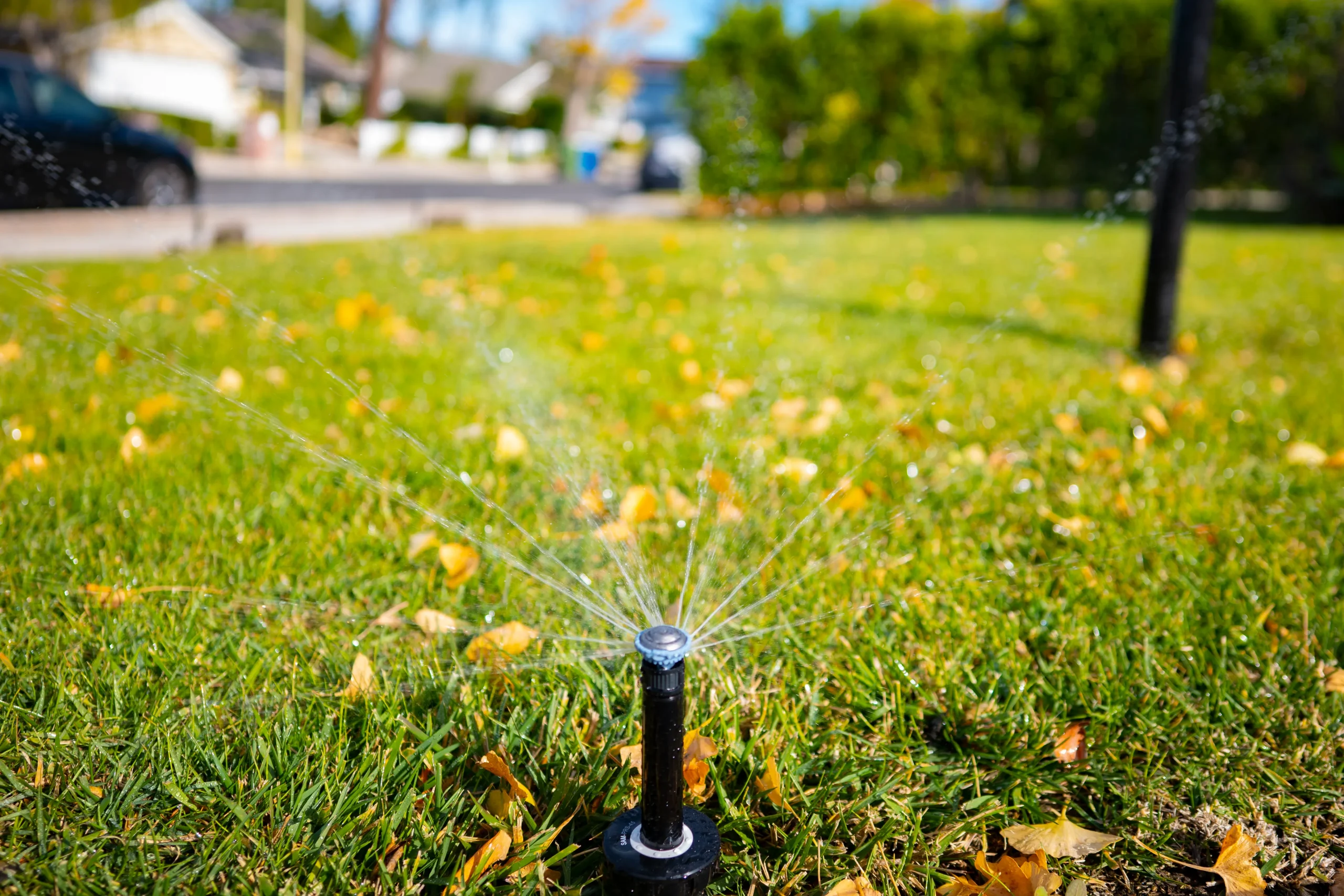
Agricultural sprinklers may include:
- Plastic impact sprinklers.
- Metal impact sprinklers.
- Low-angle sprinklers.
- Full-circle sprinklers.
- Part-circle sprinklers.
- Under-tree sprinklers.
- A low-angle sprinkler may help reduce wind influence or avoid wetting tree canopies in specific applications, but its spacing and distribution pattern must be evaluated carefully.
6. Bubblers
Bubblers deliver water to a small, concentrated area rather than covering a wide radius.
They may be used for:
- Individual trees.
- Shrubs.
- Planters.
- Basins.
- Areas requiring localized higher flow.
- Bubblers must be selected according to soil infiltration and basin capacity to prevent runoff.
7. Key Selection Factors
Regardless of sprinkler type, review:
- Required radius.
- Arc or coverage pattern.
- Operating pressure.
- Flow rate.
- Precipitation rate.
- Wind conditions.
- Soil infiltration rate.
- Site slope.
- Water quality.
- Plant type.
- Sprinkler spacing.
- Maintenance requirements.
Common Mistakes to Avoid
Mixing sprays and rotors in one zone.
Selecting the sprinkler based only on maximum radius.
Ignoring precipitation rate.
Designing at catalogue limits without an operational margin.
Ignoring pressure variation.
Using wide spacing in windy areas.
Selecting a sprinkler unsuitable for water quality.
Failing to consider maintenance access.
Selection Checklist
Confirm:
- Landscape or agricultural application.
- Area dimensions.
- Plant or crop type.
- Pressure and available flow.
- Required radius and arc.
- Precipitation rate.
- Wind and slope.
- Water quality.
- Spacing arrangement.
- Nozzle availability.
- Installation and maintenance conditions.
Conclusion: The right sprinkler is the one that provides uniform coverage at the available pressure, matches the soil and planting conditions, and can be maintained reliably throughout the project’s operating life.