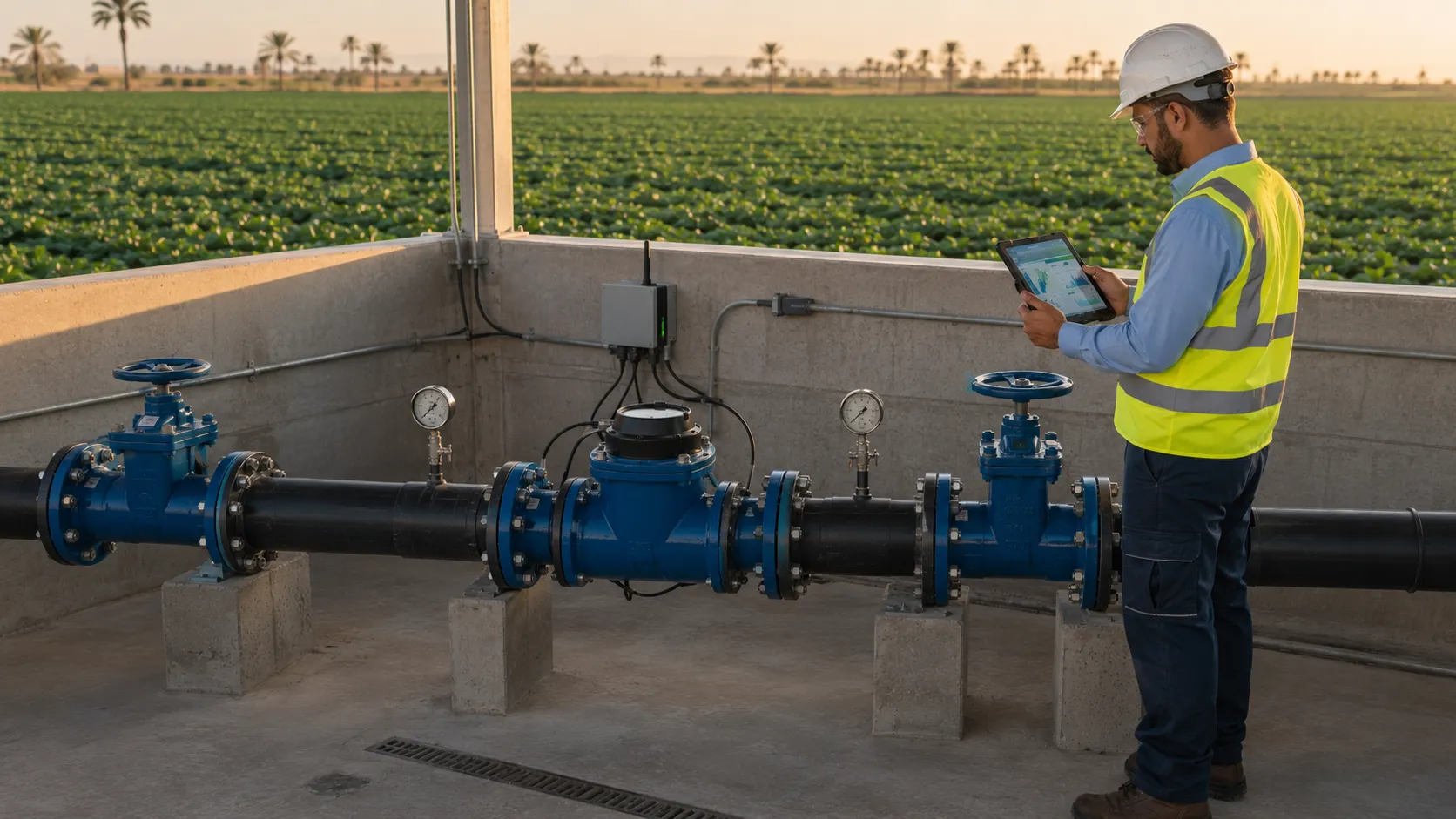
How to Choose the Right Water Meter for Your Network
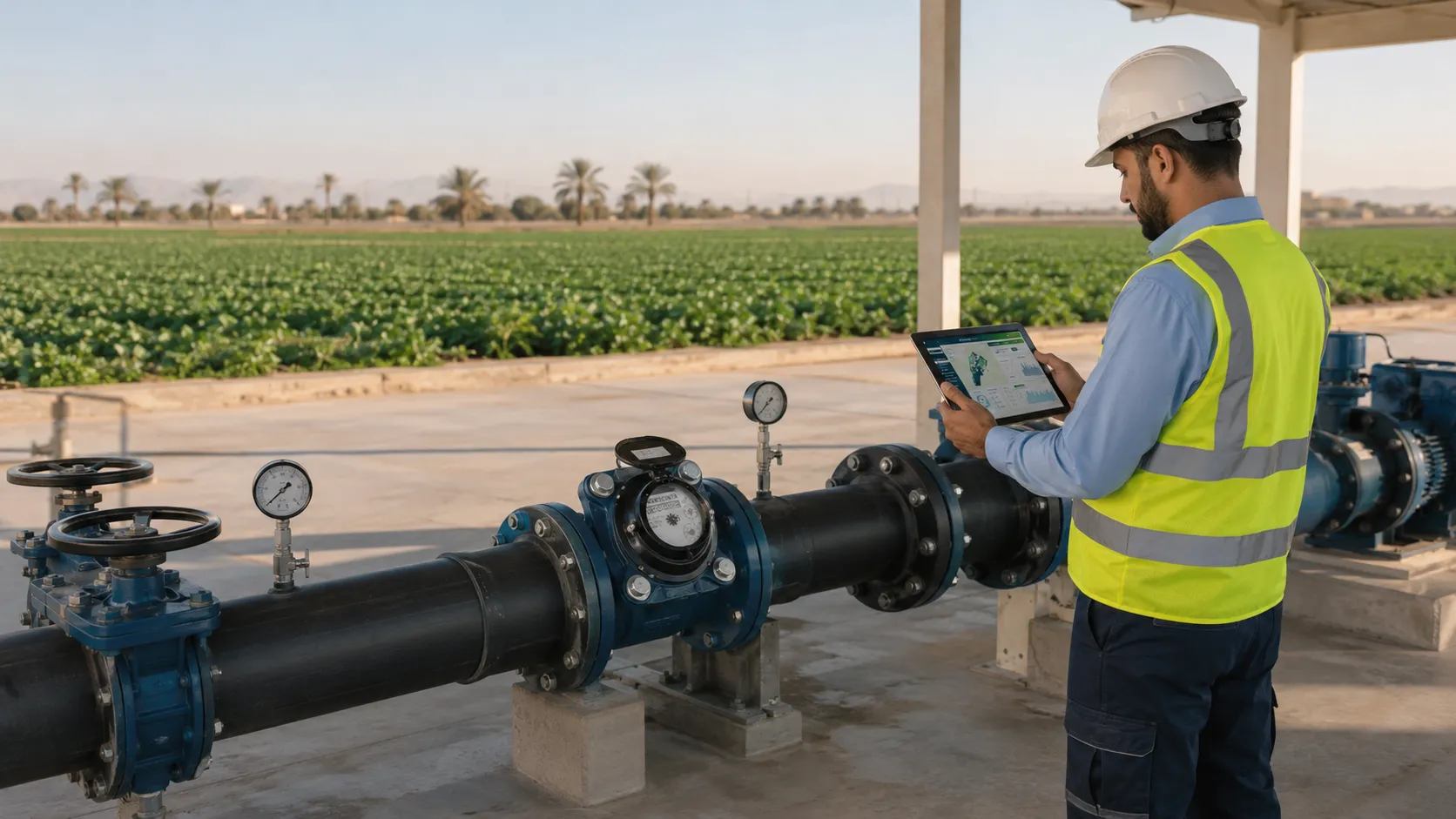
Choosing a water meter should not be based solely on pipe diameter. A meter may have the same nominal diameter as the pipeline and still provide inaccurate readings or suffer premature damage if the actual flow rate, water quality, or installation conditions fall outside its operating requirements.
A water meter should be treated as part of the complete water measurement and management system—not simply as another component installed on the pipeline.
1. Define the Purpose of the Meter
Start by asking: What exactly do you need to measure?
A water meter may be used to:
- Measure the consumption of a farm or irrigation zone.
- Monitor water use in a building or facility.
- Measure flow through a main pipeline.
- Divide consumption between different zones or users.
- Monitor irrigation network performance.
- Detect abnormal consumption or potential leakage.
- Send readings to a central monitoring system.
- Defining the objective helps determine the required accuracy, reading method, and communication capabilities.
2. Do Not Select the Meter Based on Pipe Diameter Alone
One of the most common mistakes is selecting a meter simply because its diameter matches the pipeline.
Pipe diameter is important, but the following values must also be identified:
- Minimum expected flow rate.
- Normal operating flow rate.
- Maximum possible flow rate.
- Daily operating hours.
- Expected fluctuations in flow.
- An oversized meter may fail to register low flow rates accurately. An undersized meter may cause excessive pressure loss or operate under continuous mechanical stress.
3. Consider Water Type and Quality
Water quality directly affects the type of meter required.
Determine whether the water is:
- Clean or potable water.
- Well water.
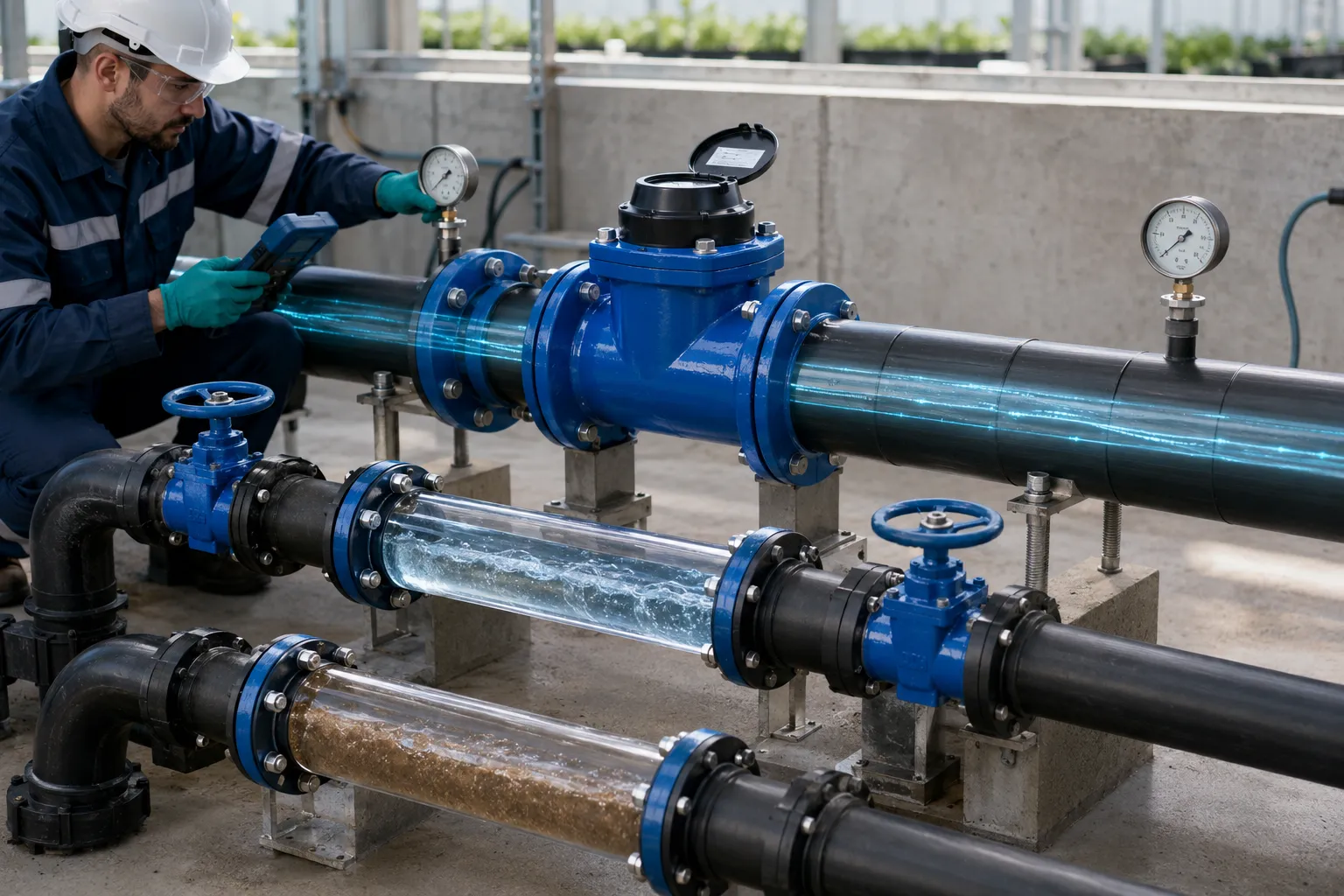
- Irrigation water containing suspended particles.
- Surface water.
- Treated wastewater.
- Water containing sand or other debris.
- A meter designed for clean water may not be suitable for irrigation water containing suspended solids. In some applications, suitable filtration may be required upstream to protect the meter’s internal components.
4. Review the Operating Pressure
The actual operating pressure—not only the design pressure—must be reviewed.
Ensure that:
- The meter can withstand the maximum expected pressure.
- Connections and flanges have compatible pressure ratings.
- The installation point is not frequently exposed to water hammer.
- Pressure and flow remain within the recommended operating range.
5. Select the Appropriate Reading Method
Not every network requires smart monitoring, but certain projects can benefit significantly from it.
Meter readings may be collected through:
- A local mechanical or digital display.
- A pulse output.
- Wired communication systems.
- Wireless communication.
- Integration with a central management platform.
- If meters are distributed across a large site or installed in remote chambers, remote reading can reduce manual effort, limit human error, and provide more consistent data.
6. Review the Installation Conditions
Even a high-quality meter can provide inaccurate readings if installed incorrectly.
Consider:
- The flow direction marked on the meter body.
- The permitted installation orientation.
- Whether the pipe remains full during measurement.
- Required straight pipe lengths upstream and downstream.
- Pumps, valves, bends, or fittings near the meter.
- Accessibility for inspection and maintenance.
- Protection from flooding, impact, or excessive heat.
Common Mistakes to Avoid
Selecting the meter based only on pipe diameter.
Ignoring minimum and maximum flow rates.
Installing the meter in a partially filled pipe.
Failing to consider water quality.
Installing it directly after a pump or bend without reviewing the instructions.
Selecting a communication method that is incompatible with the monitoring system.
Installing the meter in an inaccessible location.
Selection Checklist
Before selecting the meter, confirm:
- Pipe diameter.
- Minimum, normal, and maximum flow rates.
- Operating pressure.
- Water type and quality.
- Installation orientation and location.
- Required reading method.
- Monitoring-system integration requirements.
- Site and maintenance conditions.
Conclusion: The right meter is the one that accurately measures the actual flow range, withstands the water and network conditions, and provides the most suitable reading method for the project.