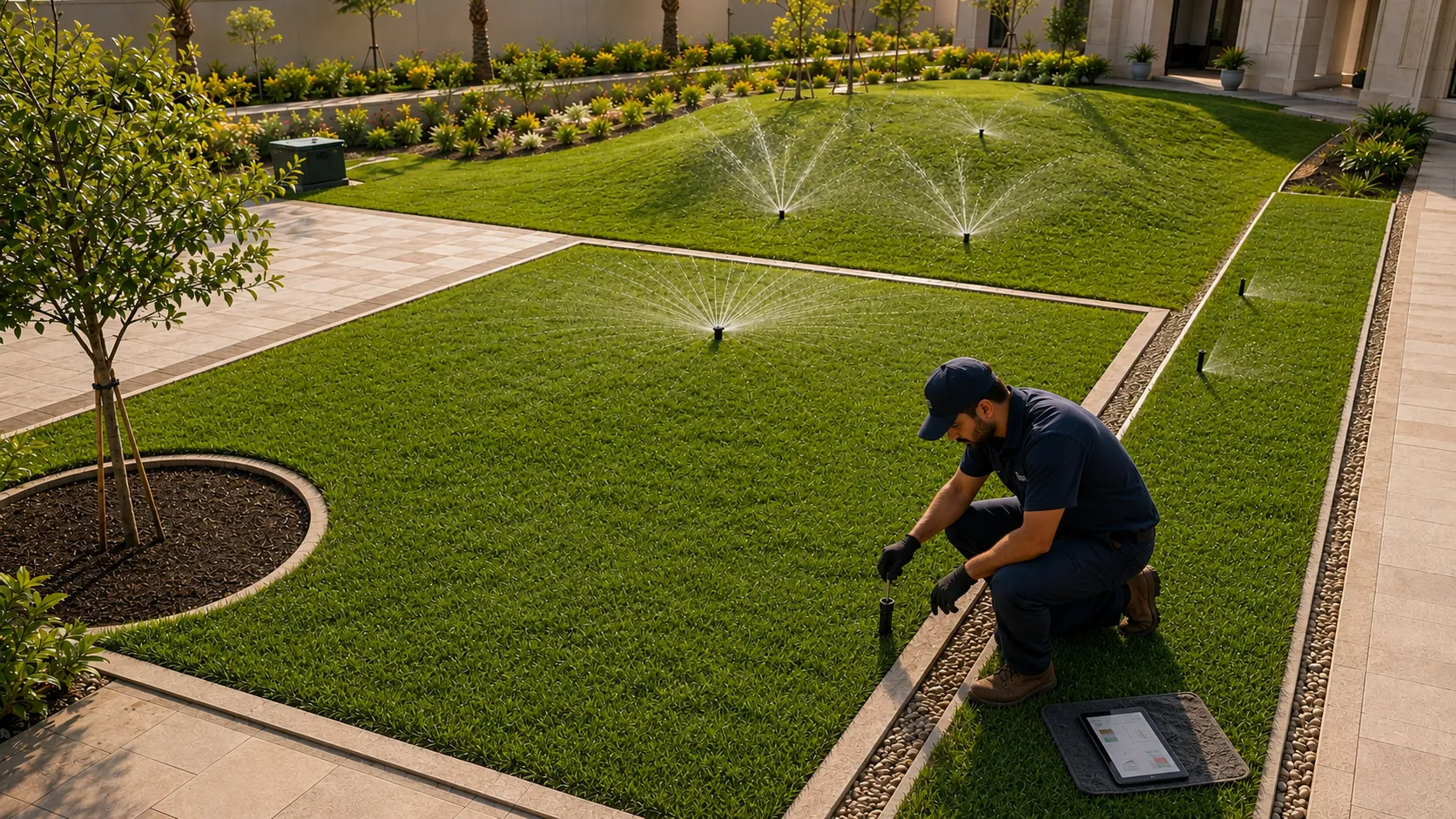
How to Choose the Right Rain Bird Nozzle
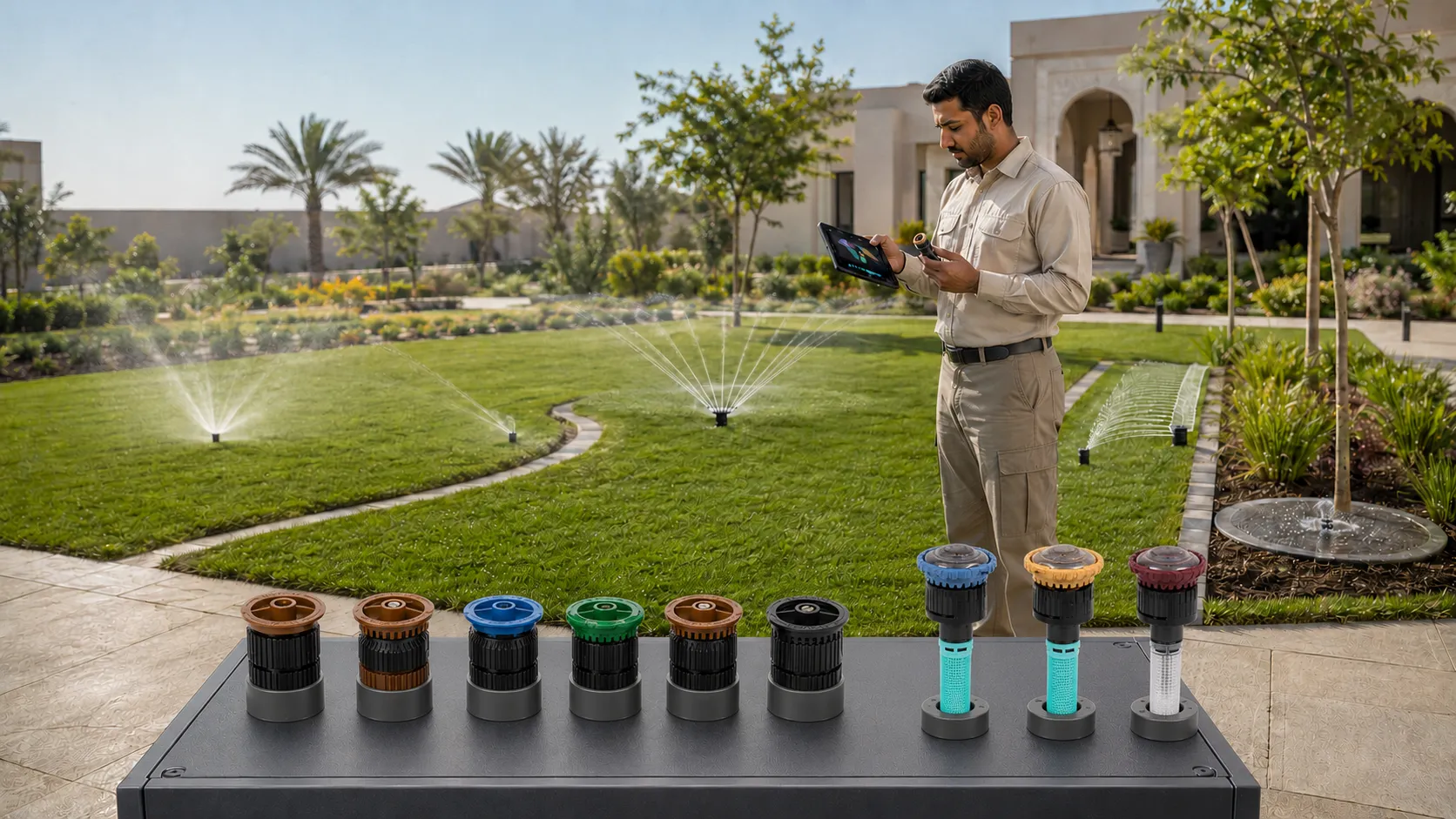
The nozzle is one of the smallest components in an irrigation system, but it directly determines the sprinkler’s flow, radius, pattern, and precipitation rate.
Changing the nozzle can completely change the hydraulic behaviour of an irrigation zone. This is why nozzles should be selected through design calculations rather than according to colour, radius, or availability alone.
Rain Bird’s official nozzle range includes fixed-pattern, variable-arc, high-efficiency, rotary, square-pattern, and bubbler nozzles. Rain Bird’s spray and rotary nozzle portfolio is designed for different landscape geometries and operating conditions.
1. MPR Fixed-Pattern Spray Nozzles
MPR stands for Matched Precipitation Rate.
These nozzles are available in predefined patterns such as:
- Quarter circle.
- Half circle.
- Full circle.
- Other application-specific patterns.
They may be suitable for:
- Regularly shaped landscape areas.
- Corners and edges.
- Designs requiring fixed, repeatable arcs.
- Projects where matched precipitation between different patterns is important.
- Fixed-pattern nozzles can reduce adjustment errors during installation and maintenance.
2. VAN Variable-Arc Nozzles
VAN nozzles allow the irrigation arc to be adjusted in the field.
They may be useful for:
- Irregular landscape shapes.
- Curved boundaries.
- Areas with non-standard corners.
- Zones requiring field adjustment.
- Locations where fixed patterns do not match the geometry.
- Their flexibility is useful, but incorrect adjustment can cause overwatering, undercoverage, or water reaching roads and buildings.
3. HE-VAN High-Efficiency Variable-Arc Nozzles
HE-VAN nozzles combine adjustable arcs with a design intended to improve distribution uniformity compared with standard variable-arc spray nozzles.
They may be considered when:
- The site has irregular boundaries.
- Adjustable arcs are required.
- Distribution performance is a priority.
- Wind and coverage consistency are important considerations.
- The operating pressure must still be controlled to reduce misting and maintain the intended pattern.
4. U-Series Dual-Orifice Nozzles
U-Series nozzles use two outlet openings to improve water distribution near the sprinkler head as well as toward the outer part of the radius.
They can help address a common spray-irrigation challenge: insufficient water close to the sprinkler.
Rain Bird classifies U-Series models as high-efficiency, dual-orifice spray nozzles. The manufacturer states that this range can use less water than conventional alternatives under suitable design and operating conditions. Any performance claim should still be evaluated within the complete system design.
5. R-VAN Rotary Nozzles
R-VAN nozzles distribute rotating streams and are installed on compatible spray bodies.
They may be suitable for:
- Medium-radius applications.
- Sloped areas.
- Sites with slower-infiltration soils.
- Zones where a lower precipitation rate is beneficial.
- Retrofit applications.
Important considerations include:
- Recommended operating pressure.
- Required radius.
- Arc range.
- Spacing.
- Compatibility between different R-VAN models.
- Available station flow.
- R-VAN rotary nozzles should not normally be mixed in the same zone with conventional spray nozzles because their precipitation rates and required operating times differ.
6. SQ Series Square-Pattern Nozzles
SQ nozzles are designed to provide a square irrigation pattern rather than a conventional circular pattern.
They may be useful for:
- Narrow rectangular planting areas.
- Small square zones.
- Dense planting grids.
- Applications where circular overspray would reach adjacent surfaces.
- Their layout and spacing must follow the manufacturer’s recommended square-pattern arrangement.
7. Bubbler Nozzles
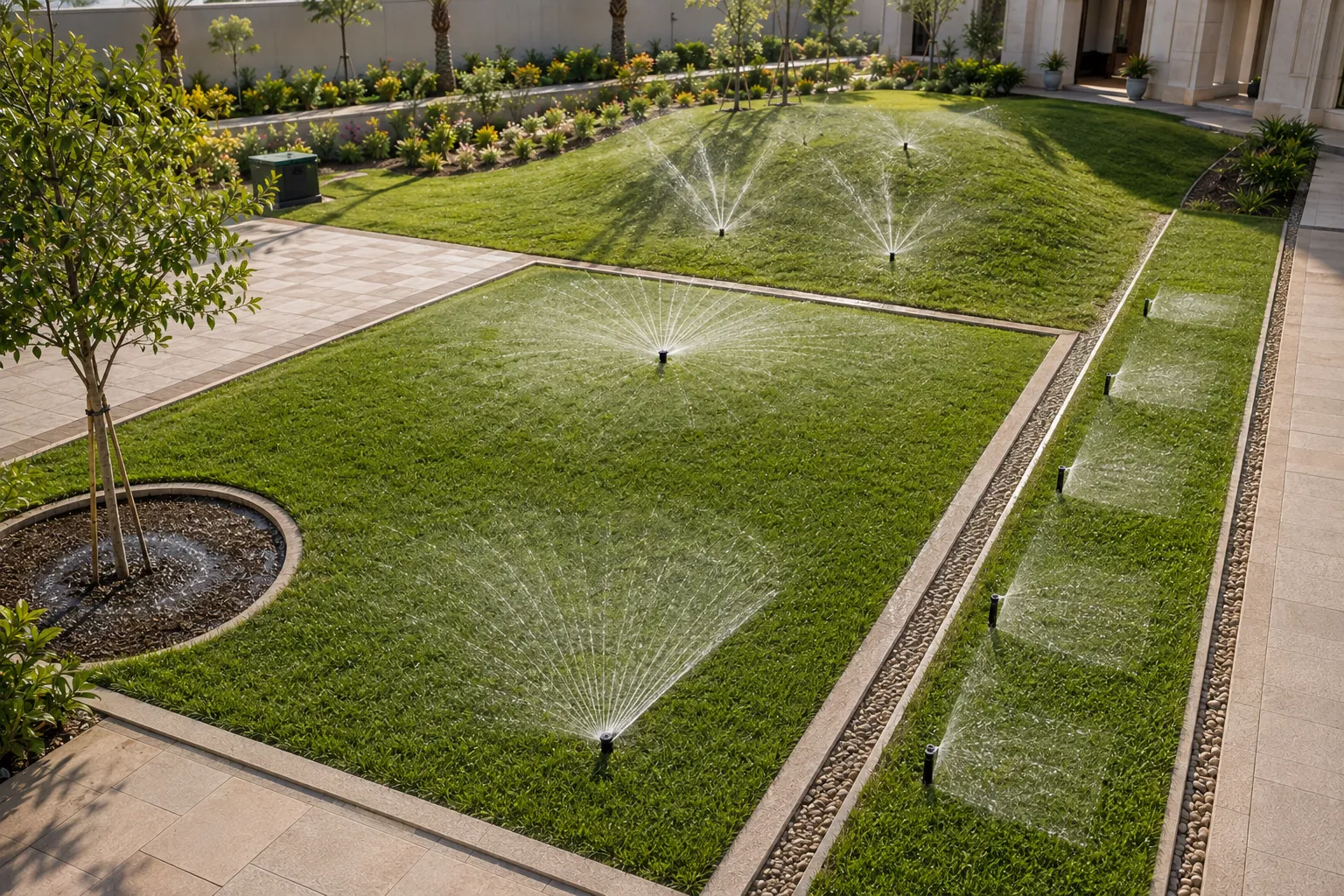
Rain Bird offers bubbler options for concentrated watering around:
- Trees.
- Shrubs.
- Planters.
- Basins.
- Individual planting locations.
- Some bubbler models provide pressure-compensating flow, while others produce a short stream pattern.
Bubbler selection should consider:
- Required flow.
- Basin dimensions.
- Soil infiltration rate.
- Number of bubblers per plant.
- Available pressure.
- Risk of runoff.
8. Select the Correct Radius
The radius printed on the nozzle represents performance under defined conditions.
Actual field radius may be affected by:
- Operating pressure.
- Wind.
- Installation height.
- Nozzle adjustment.
- Manufacturing and hydraulic tolerances.
- Nearby vegetation.
- Designing the spacing at the absolute maximum published radius can reduce the available safety margin.
9. Match the Arc and Precipitation Rate
A quarter-circle nozzle irrigates a smaller area than a full-circle nozzle. To maintain similar precipitation across the zone, flow must be matched to the irrigated arc.
This principle is known as matched precipitation.
When selecting nozzles, compare:
- Radius.
- Arc.
- Flow.
- Precipitation rate.
- Spacing method.
- Recommended pressure.
10. Use Pressure-Regulated Spray Bodies Where Required
Excessive pressure can cause:
- Misting.
- Smaller droplets.
- Wind drift.
- Reduced distribution quality.
- Water loss outside the target area.
- A pressure-regulated spray body or suitable pressure-control method can help the nozzle operate closer to its intended pressure.
Common Mistakes to Avoid
Selecting a nozzle according to colour alone.
Mixing spray and rotary nozzles in the same zone.
Ignoring nozzle flow when calculating zone demand.
Adjusting the radius excessively.
Using variable-arc nozzles where fixed patterns would be more reliable.
Ignoring pressure regulation.
Using bubblers without considering soil infiltration.
Replacing a nozzle with a different type without recalculating the zone.
Nozzle Selection Checklist
Confirm:
- Spray body compatibility.
- Required radius.
- Required arc or pattern.
- Nozzle flow.
- Precipitation rate.
- Operating pressure.
- Available zone flow.
- Wind and slope.
- Soil infiltration.
- Sprinkler spacing.
- Fixed, adjustable, rotary, square, or bubbler application.
Conclusion: The right Rain Bird nozzle is the one that matches the area geometry, operating pressure, available flow, sprinkler spacing, and required precipitation rate—not simply the nozzle with the longest radius.